HbA1c Test Explained: Normal, Prediabetes & Diabetes Levels and What Your Result Means
Written by Dr. Ankur Sharma, MBBS, MD Medicine
Consultant Physician & Diabetologist | Sharma Specialty Clinic, Pune
If you have recently had an HbA1c test and are wondering what your number means, you are not alone. HbA1c is one of the most commonly used blood tests for diagnosing and monitoring diabetes and prediabetes.
Unlike a single blood sugar reading, which tells you your glucose level at one particular point in time, HbA1c provides an estimate of your average blood glucose over approximately the previous 2–3 months.
Understanding your HbA1c level can help identify prediabetes or diabetes, assess glucose control, and guide decisions about lifestyle changes and treatment.
What Is an HbA1c Test?
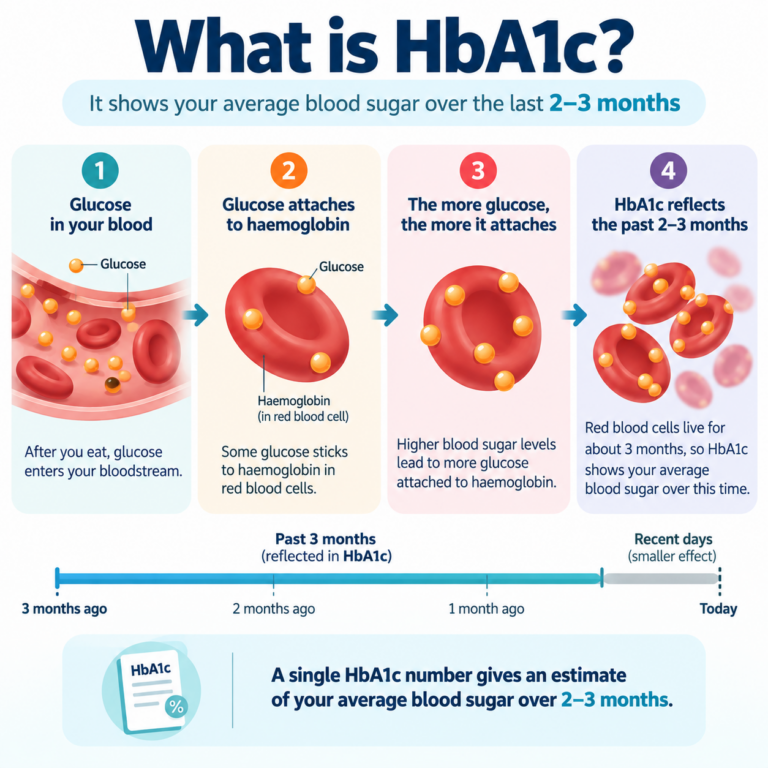
HbA1c, also known as glycated haemoglobin or A1C, is a blood test that measures the percentage of haemoglobin in your red blood cells that has glucose attached to it.
When glucose levels in the blood are higher, more glucose attaches to haemoglobin.
Because red blood cells generally circulate for around three months, HbA1c provides an indication of your average blood glucose during this period.
This makes HbA1c particularly useful because it provides information about your longer-term glucose exposure, rather than just your blood sugar at the time of testing.
How Does HbA1c Measure Blood Sugar?
After you eat, carbohydrates are broken down into glucose, which enters the bloodstream. Some of this glucose attaches to haemoglobin inside red blood cells.
The higher your blood glucose levels and the longer they remain elevated, the greater the proportion of glycated haemoglobin.
An HbA1c result is therefore reported as a percentage.
For example, an HbA1c of 5.5% means that approximately 5.5% of haemoglobin is glycated.
HbA1c does not show exactly what your blood sugar was at every moment. It represents an average measure and may not capture significant glucose fluctuations or spikes.
What Are the Normal, Prediabetes and Diabetes HbA1c Levels?
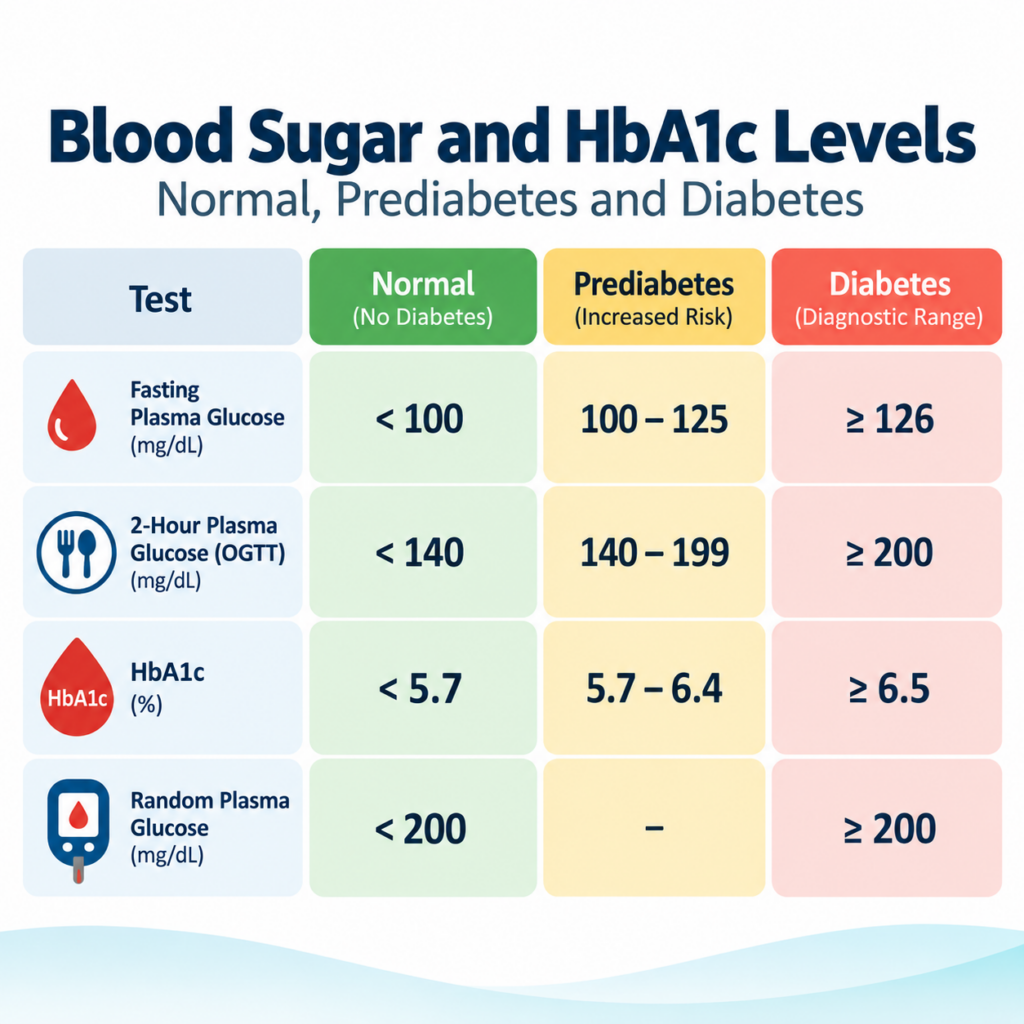
For most non-pregnant adults, commonly used diagnostic thresholds are:
| HbA1c | Interpretation |
|---|---|
| Below 5.7% | Normal |
| 5.7%–6.4% | Prediabetes |
| 6.5% or higher | Diabetes diagnostic range |
An HbA1c result of 6.5% or higher is in the diabetes diagnostic range.
However, if a person does not have typical symptoms of diabetes, an isolated abnormal result may need confirmation with a repeat test or another accepted diabetes test.
Your doctor will interpret the result based on your symptoms, medical history and other blood glucose measurements.
What Does an HbA1c in the Prediabetes Range Mean?
An HbA1c between 5.7% and 6.4% is generally considered to be in the prediabetes range.
Prediabetes does not necessarily mean that you will develop type 2 diabetes.
It is, however, an important warning sign that your glucose metabolism may already be changing and that you have an increased risk of developing diabetes in the future.
This stage provides an opportunity to intervene through weight management, physical activity, dietary changes and appropriate medical care.
What Are the Different Types of HbA1c Testing?
Patients may encounter two common approaches to HbA1c testing:
1. Finger-Prick Point-of-Care HbA1c Test
A small drop of blood is obtained by pricking the fingertip and analysed using a point-of-care HbA1c analyser.
The main advantages are convenience and speed. Depending on the device, the result may be available within minutes.
Point-of-care HbA1c testing can be useful during a clinical consultation because the result may be available immediately and can help guide discussion and management.
However, the reliability of a finger-prick HbA1c result depends on the specific analyser, its validation, calibration, quality-control procedures, sample collection and handling, and operator technique.
Therefore, not every point-of-care HbA1c test should automatically be considered equivalent to a laboratory test.
If a result is unexpected, does not fit the clinical picture, or diagnostic confirmation is required, your doctor may recommend a laboratory HbA1c test.
2. Laboratory HbA1c Test Using a Venous Blood Sample
For a conventional laboratory HbA1c test, a blood sample is collected from a vein, usually from the arm, and sent to a laboratory for analysis.
Laboratory HbA1c testing is a well-established method and is commonly used when a laboratory-based measurement is required for diagnosis, confirmation or detailed clinical assessment.
Which HbA1c Test Is More Accurate?
There is no simple rule that every finger-prick HbA1c test is inaccurate.
A properly validated and quality-controlled point-of-care HbA1c analyser can provide reliable results.
Laboratory venous testing, however, offers the advantages of standardised laboratory processing and is commonly preferred when diagnostic confirmation is important.
If a finger-prick result is unexpectedly high or does not match your symptoms, home glucose readings or previous HbA1c results, your doctor may recommend repeating the test using a venous laboratory sample.
Finger-Prick vs Venous HbA1c Testing
| Feature | Finger-prick HbA1c | Venous laboratory HbA1c |
|---|---|---|
| Sample | Small fingertip blood sample | Blood collected from a vein |
| Testing location | Point-of-care setting | Laboratory |
| Result | Often available quickly | Requires laboratory processing |
| Fasting | Not required for HbA1c | Not required for HbA1c |
| Reliability | Depends on validated device and quality control | Established laboratory testing method |
| Common use | Convenient point-of-care assessment | Diagnosis, confirmation and laboratory assessment |
Does an HbA1c Test Require Fasting?
No. HbA1c testing itself does not require fasting.
You can generally have an HbA1c test at any time of the day, regardless of when you last ate.
However, if your doctor is ordering HbA1c along with fasting blood glucose or other tests that require fasting, you may still be asked to fast.
What Does a High HbA1c Level Mean?
A high HbA1c generally indicates that your average blood glucose has been elevated over the preceding weeks or months.
Possible reasons include:
- Previously undiagnosed diabetes
- Diabetes that is not adequately controlled
- Weight gain
- Changes in diet or physical activity
- Illness or infection
- Certain medications or medical conditions
- Missed or incorrectly taken diabetes medication
- Progression of diabetes over time
The appropriate response depends on why your HbA1c is elevated, rather than simply trying to reduce the number.
Can HbA1c Be High Even If My Blood Sugar Readings Are Normal?
Yes.
This is an important point.
Home blood glucose monitoring usually provides readings at selected times, such as fasting or before or after meals. It may not capture glucose elevations at other times of the day.
For example, a person may have a relatively normal fasting glucose level but experience significant after-meal glucose elevations.
Conversely, HbA1c can sometimes be affected by conditions involving red blood cells or haemoglobin.
If your HbA1c and glucose readings do not appear to match, your doctor may investigate the reason.
Can HbA1c Be Used to Diagnose Prediabetes?
Yes.
An HbA1c of 5.7%–6.4% is generally within the prediabetes range.
Prediabetes is an opportunity for early intervention.
Depending on your individual risk, your doctor may recommend:
- Weight management
- Regular physical activity
- Dietary changes
- Adequate sleep
- Management of blood pressure and cholesterol
- Periodic glucose monitoring
- Medication in selected individuals
Not everyone with prediabetes needs medication, but everyone benefits from understanding and addressing their individual risk factors.
How Can You Lower Your HbA1c?
The approach depends on why your HbA1c is elevated.
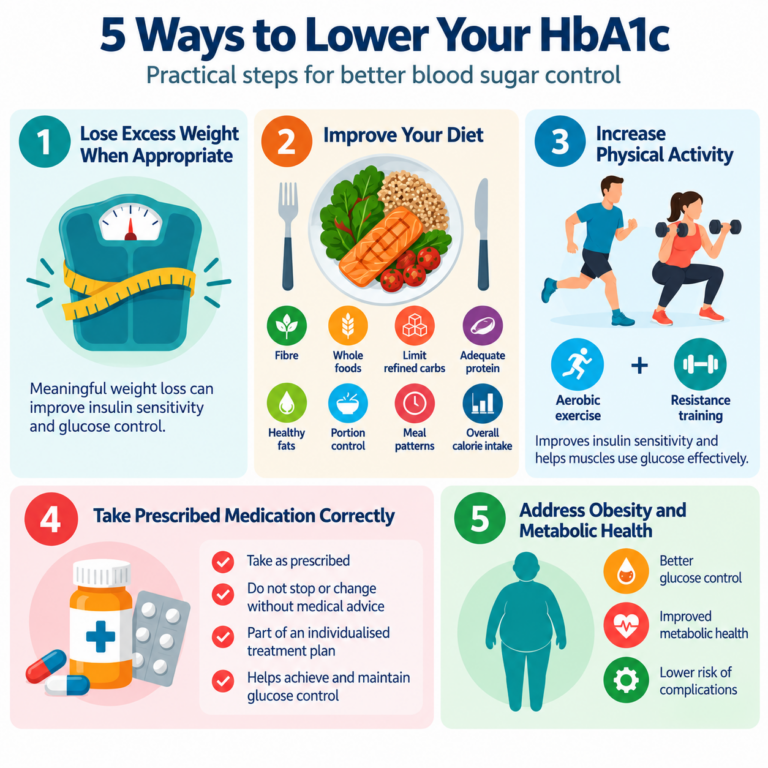
1. Lose Excess Weight When Appropriate
For people who are overweight or living with obesity, meaningful weight loss can improve insulin sensitivity and glucose control.
Weight management can therefore be an important part of diabetes and prediabetes care.
2. Improve Your Diet
Managing diabetes is not simply about avoiding sugar.
A healthy eating pattern considers:
- Portion sizes
- Total carbohydrate intake
- Refined carbohydrates
- Fibre
- Protein
- Healthy fats
- Meal patterns
- Overall calorie intake
The most appropriate dietary approach varies from person to person.
3. Increase Physical Activity
Regular physical activity improves insulin sensitivity and helps muscles use glucose more effectively.
A combination of aerobic exercise and resistance training can be beneficial for many people.
4. Take Prescribed Medication Correctly
Some people require medication to achieve appropriate glucose control.
Diabetes treatment should be individualised based on factors such as:
- HbA1c and glucose levels
- Body weight
- Cardiovascular risk
- Kidney function
- Age
- Other medical conditions
- Risk of hypoglycaemia
Medication should not be started, stopped or changed without medical advice.
5. Address Obesity and Metabolic Health
Diabetes and obesity frequently occur together.
For some individuals, addressing excess weight as part of diabetes management can improve glucose control and broader metabolic health.
How Quickly Can HbA1c Improve?
HbA1c reflects approximately 2–3 months of blood glucose exposure, so it does not change immediately after a few days of improved glucose levels.
However, recent weeks have a greater influence on the HbA1c than glucose levels from several months earlier.
This means that sustained improvement in blood glucose can begin to influence HbA1c within weeks.
Your doctor can determine when it is appropriate to repeat the test after a change in treatment or lifestyle.
How Often Should HbA1c Be Checked?
The appropriate frequency depends on whether you have:
- Diabetes
- Prediabetes
- Stable or changing glucose control
- Recently started or changed treatment
- Other medical conditions affecting glucose control
People with diabetes may need HbA1c testing several times a year, particularly when treatment is being changed or glucose control is not at target.
People with stable diabetes may require testing less frequently.
People with prediabetes may also benefit from periodic monitoring depending on their individual risk.
What Can Affect the Accuracy of an HbA1c Test?
HbA1c is a very useful test, but certain conditions can affect its interpretation.
These may include conditions that alter red blood cells or haemoglobin, such as:
- Certain types of anaemia
- Haemoglobin variants
- Recent significant blood loss
- Blood transfusion
- Certain kidney or other medical conditions
If your HbA1c result does not match your symptoms or blood glucose readings, your doctor may consider whether an alternative or additional test is appropriate.
HbA1c and Obesity: Why Are They Connected?
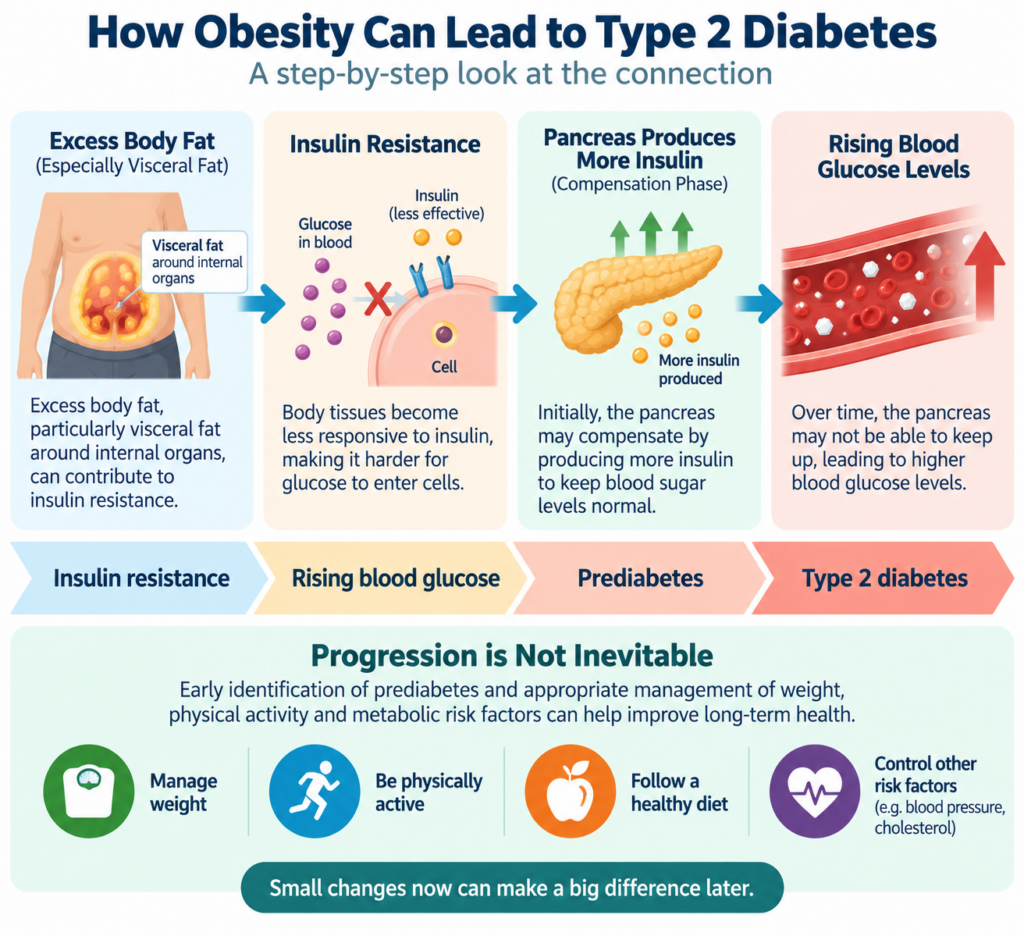
Obesity and type 2 diabetes are closely associated through insulin resistance and metabolic dysfunction.
Excess body fat, particularly visceral fat around internal organs, can contribute to insulin resistance.
Initially, the pancreas may compensate by producing more insulin. Over time, however, this compensation may become insufficient, causing blood glucose to rise.
This can contribute to the progression:
Insulin resistance → rising blood glucose → prediabetes → type 2 diabetes
However, progression is not inevitable.
Early identification of prediabetes and appropriate management of weight, physical activity and metabolic risk factors can help improve long-term health.
When Should You See a Doctor About Your HbA1c?
Consider discussing your HbA1c result with a doctor if:
- Your HbA1c is in the prediabetes range
- Your HbA1c is 6.5% or higher
- Your HbA1c has increased compared with previous results
- Your blood glucose readings and HbA1c do not match
- You have excessive thirst or frequent urination
- You have unexplained weight loss
- You have a family history of diabetes along with other risk factors
- You are overweight or have obesity and other metabolic risk factors
- Your diabetes treatment does not appear to be controlling your glucose adequately
A single number should always be interpreted in the context of your overall health.
FAQ's
What is a normal HbA1c level?
For most non-pregnant adults, an HbA1c below 5.7% is considered normal. An HbA1c of 5.7%–6.4% is in the prediabetes range, while 6.5% or higher is in the diabetes diagnostic range.
Does HbA1c require fasting?
No. HbA1c testing does not require fasting because it reflects average blood glucose over approximately 2–3 months rather than blood sugar at the time of testing.
Is HbA1c 6.5% considered diabetes?
An HbA1c of 6.5% or higher is within the diabetes diagnostic range. Depending on your symptoms and clinical circumstances, your doctor may recommend confirmation with repeat testing or another accepted diabetes test.
What is the difference between a finger-prick HbA1c test and a venous blood test?
A finger-prick HbA1c test uses a point-of-care analyser and can provide a rapid result. A venous blood sample is collected from a vein and analysed in a laboratory. A properly validated point-of-care device can provide reliable results, while laboratory testing may be preferred when diagnostic confirmation is required.
Can HbA1c be high even if fasting blood sugar is normal?
Yes. HbA1c reflects average glucose exposure over several weeks, while fasting blood glucose measures glucose at one particular time. Some people may have normal fasting glucose but elevated after-meal or other glucose levels.
How can I lower my HbA1c naturally?
Depending on the cause, improving dietary habits, increasing physical activity, losing excess weight when appropriate and improving overall metabolic health can help lower HbA1c. Some people also require medication.
How long does it take to lower HbA1c?
HbA1c changes gradually because it reflects blood glucose over approximately 2–3 months. Improvements in glucose control can begin to influence HbA1c within weeks, although sustained changes are better assessed over a longer period.
How often should HbA1c be checked?
The appropriate frequency depends on whether you have diabetes, prediabetes or other risk factors, and whether your glucose control is stable. Your doctor can recommend an appropriate testing interval.
Take-Home Message
HbA1c is one of the most useful tests for understanding longer-term blood glucose control.
In general:
- Below 5.7%: Normal
- 5.7%–6.4%: Prediabetes range
- 6.5% or higher: Diabetes diagnostic range
But HbA1c is more than just a number.
The result should be interpreted alongside your blood glucose readings, symptoms, weight, medical history and other cardiovascular and metabolic risk factors.
If your HbA1c is elevated, early evaluation can help identify the reason and determine whether lifestyle changes, weight management, medication or further testing may be appropriate.
About Dr. Ankur Sharma
Dr. Ankur Sharma, MBBS, MD Medicine, is a Consultant Physician and Diabetologist at Sharma Specialty Clinic, Pune, with a focus on diabetes, obesity, hypertension and metabolic health.
He provides personalised evaluation and management for diabetes, prediabetes, obesity and related metabolic conditions at Sharma Specialty Clinic, Bhukum and Erandwane, Pune.
This article is intended for general educational purposes and does not replace an individual medical consultation. Diabetes diagnosis and treatment should be based on a person’s complete clinical assessment.